Is It Possible to Lose 10kg in a Month? The Honest Answer
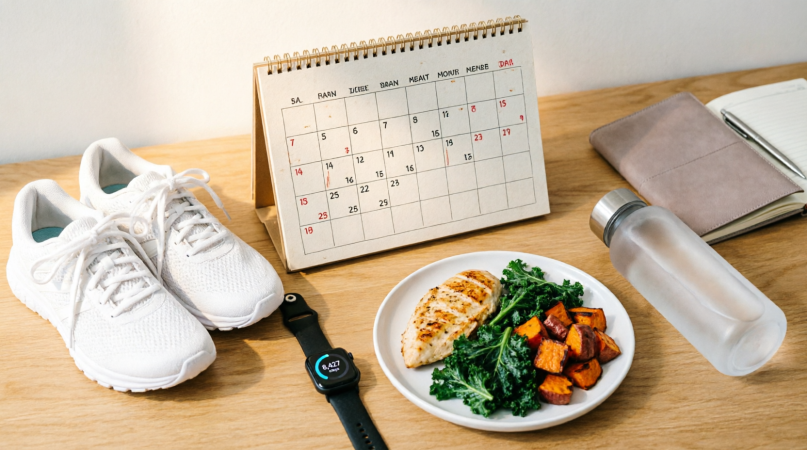
Look, I get it. You've got a wedding in four weeks. Or a reunion. Or you just looked in the mirror and thought, "I need this gone, fast." So you typed "is it possible to lose 10kg in a month" into Google hoping someone would say yes.
Here's the truth. Technically? Some people have done it. But should you? Almost certainly not. And here's exactly why — plus what you can realistically do in 30 days without wrecking your metabolism, your muscles, or your sanity.
No sugarcoating. No fake promises. Just straight talk.
The Short Answer (and Why It's Complicated)
Can someone lose 10kg in 30 days? In extreme cases, yes. But here's what most articles won't tell you: a huge chunk of that "loss" isn't fat. It's water. It's muscle. It's your body panicking.
To lose 1kg of pure body fat, you need roughly a 7,700-calorie deficit. So 10kg of fat means a 77,000-calorie deficit in 30 days. That's about 2,566 calories below maintenance every single day. For most people, that's basically eating nothing. And even then, your body fights back. Hard.
Research in metabolic science consistently shows that extreme caloric restriction triggers adaptive thermogenesis — your metabolism slows down to protect you. So the harder you starve, the less you actually burn. Frustrating, right?
"Anyone promising you'll drop 10kg of fat in a month is either lying or selling you something. Real, sustainable fat loss is slower. And that's not a weakness — that's biology." — Dr. Anil Mehta, Obesity Medicine Specialist
What Actually Happens to Your Body During Extreme Crash Dieting
Let's walk through it. You slash calories to 800 a day. Maybe less.
Week 1: The scale drops fast. 3-4kg, maybe. You feel amazing. But here's the thing — that's mostly glycogen and water leaving your muscles. Not fat.
Week 2: Energy tanks. You're irritable. You can't focus at work. Your body starts breaking down muscle tissue for fuel because it thinks you're starving.
Week 3: Metabolism slows noticeably. You're eating almost nothing and the scale barely moves. Hair thinning. Sleep getting worse. You're cold all the time.
Week 4: You white-knuckle through. Maybe the scale shows -8 or -9kg. But you've lost muscle, water, and your metabolic rate is now lower than when you started.
Then you eat normally again. And the weight comes back. Often with a friend or two extra. This is the rebound effect, and clinical research confirms it happens to the vast majority of extreme dieters.
| What You Lose | What's Actually Happening | Is It Permanent? |
|---|---|---|
| Water weight (2-4kg) | Glycogen stores deplete, water follows | No — returns within days of normal eating |
| Muscle mass (1-2kg) | Body breaks down muscle for energy | No — but rebuilding takes months |
| Actual fat (1-2kg) | Caloric deficit burns some fat | Partially — but metabolism is now slower |
| Digestive contents (1-2kg) | Less food in your system | No — returns immediately |
So that "10kg loss"? Maybe 2-3kg was actual fat. The rest was an illusion.
The Dangerous Methods People Try (Skip These)
You'll find forums and sketchy sites pushing all kinds of nonsense. Let me save you the trouble.
| Method | Why People Try It | Why It's Dangerous |
|---|---|---|
| Fasting for 20+ hours daily | "Quick results" | Muscle loss, nutrient deficiency, binge-restrict cycle |
| Laxatives / diuretics | "Flush out weight" | Electrolyte imbalance, kidney stress, dehydration |
| Extreme cardio (2-3 hrs/day) | "Burn everything" | Joint damage, overtraining, cortisol spike |
| Unregulated fat-burner pills | "Melt fat while sleeping" | Liver damage, heart arrhythmia, unknown ingredients |
| Single-food diets (cabbage soup, etc.) | "Simple and fast" | Severe nutrient gaps, metabolic slowdown |
Seriously. Avoid all of these. Every single one.
If something promises you'll "melt 10kg while you sleep" or "flush fat overnight," it's garbage. Your body doesn't work that way.
What Realistic, Safe Weight Loss Actually Looks Like
Medical consensus is pretty clear here: a safe, sustainable rate of fat loss is roughly 0.5 to 1kg per week. That's 2-4kg in a month. Maybe 5kg if you're carrying a lot of extra weight and it's the first month.
Not sexy. Not viral-TikTok sexy. But it's what keeps the weight off.
"I'd rather see a patient lose 3kg of actual fat and keep it off for five years than lose 10kg in a month and gain back 12kg. Slow is smooth. Smooth is fast." — Dr. Priya Nair, Registered Dietitian & Sports Nutritionist
So what does a realistic 30-day target look like?
| Starting Weight Category | Realistic 30-Day Loss | What It Requires |
|---|---|---|
| Overweight (BMI 25-30) | 3-5kg | Moderate deficit + movement |
| Obese (BMI 30+) | 4-6kg | Structured plan + medical guidance |
| Near healthy weight | 1-2.5kg | Small tweaks, not a "diet" |
| Already lean/athletic | 0.5-1.5kg | Very hard, marginal gains |
A Practical Plan That Won't Wreck Your Body
Okay. So 10kg in a month is off the table. But you can make serious, visible progress in 30 days. Here's how.
Step 1: Figure out your maintenance calories. Use a TDEE calculator. Eat 400-500 calories below that. Not 1,500 below. Not 2,000. Five hundred.
Step 2: Prioritize protein. Aim for 1.6-2.2g per kg of bodyweight. Chicken, fish, eggs, legumes, Greek yoghurt, tofu. Protein protects your muscle while you're in a deficit.
Step 3: Move daily. Not punish yourself daily. Walk 8,000-10,000 steps. Add 3-4 strength sessions a week. Maybe two shorter cardio sessions. That's it. You don't need to live in the gym.
Step 4: Sleep 7-8 hours. Non-negotiable. Poor sleep spikes ghrelin (hunger hormone), tanks your willpower, and slows recovery.
Step 5: Track loosely. Weigh yourself 2-3 times a week, take the average. Don't obsess over daily fluctuations. Water weight swings 1-2kg overnight. Normal.
Nutrition That Supports Fat Loss (Not Starvation)
You don't need a 1,200-calorie diet. You need smarter eating.
| Food Group | Best Picks | Why It Helps |
|---|---|---|
| Protein | Eggs, chicken breast, fish, lentils, paneer/tofu | Keeps you full, protects muscle |
| Fibre | Oats, vegetables, berries, beans | Slows digestion, stabilises blood sugar |
| Healthy fats | Avocado, nuts (small portions), olive oil | Hormone balance, satiety |
| Complex carbs | Sweet potato, brown rice, whole wheat | Sustained energy, no crashes |
| Hydration | Water, black coffee, green tea | Reduces false hunger, supports metabolism |
Cut the obvious stuff: sugary drinks, fried snacks, alcohol, ultra-processed junk. You don't need a nutritionist to tell you that. You already know.
What you might not know: you don't have to be perfect. An 80/20 approach — clean eating 80% of the time — beats a "perfect" diet you quit after nine days.
Sleep, Stress & Why They Matter More Than You Think
Here's something most weight-loss articles skip entirely.
If you're sleeping 5 hours a night and stressed out of your mind at work, your cortisol is chronically elevated. High cortisol promotes fat storage around the midsection, increases cravings for sugar, and blunts your body's ability to burn fat efficiently.
So all the kale salads in the world won't fix a broken sleep schedule.
Aim for:
- 7-8 hours of actual sleep (not just time in bed)
- A wind-down routine: no screens 30 min before bed
- Stress management: even 10 minutes of walking outside helps
- Limiting alcohol (it wrecks sleep quality and adds empty calories)
"I tell every client the same thing: fix your sleep before you touch your diet. A well-rested body makes better food choices almost automatically. A sleep-deprived body craves sugar like it's oxygen." — Coach Ravi Deshpande, Certified Strength & Conditioning Specialist
What to Expect: A No-BS 30-Day Timeline
| Week | What Happens | What You'll Feel | Tips |
|---|---|---|---|
| Week 1 | Water weight drops (1-2kg), body adjusts | Hungry, irritable, maybe headache | Drink more water, don't panic |
| Week 2 | Actual fat loss kicks in (0.5-1kg) | Energy stabilises, cravings reduce | Stick to protein targets, walk daily |
| Week 3 | Steady loss (0.5-1kg), clothes fit differently | More confident, less bloated | Don't increase deficit — stay consistent |
| Week 4 | Total loss: ~2-4kg of real progress | Noticeable difference in mirror | Celebrate, then plan month 2 |
That's 2-4kg in a month. Not 10. But it's real. And you can keep doing it. In three months, that's 6-12kg. In six months, you're a different person. And you didn't destroy your metabolism to get there.
When to Talk to a Doctor
If you're thinking about losing 10kg or more, it's worth a quick check-in with your GP. Especially if:
- You have thyroid issues, diabetes, or hormonal imbalances
- You're on medication that affects weight
- You've tried multiple times and the weight won't budge
- You're considering any supplements or extreme restrictions
- You have a history of disordered eating
There's zero shame in getting professional guidance. A doctor or registered dietitian can rule out underlying issues and build a plan around your body.
Key Takeaways
✓ Is it possible to lose 10kg in a month? Technically, but most of it won't be fat — and it's not safe.
✓ Realistic, healthy fat loss is 0.5-1kg per week. That's 2-4kg in 30 days.
✓ Extreme crash diets wreck your metabolism, muscle, and mental health.
✓ A moderate 400-500 calorie deficit with high protein and daily movement works.
✓ Sleep and stress management matter as much as what you eat.
✓ The weight you lose slowly is the weight you actually keep off.
✓ Talk to a doctor before starting any aggressive weight-loss plan.
Frequently Asked Questions
Q: Is it possible to lose 10kg in a month?
A: Technically, some people have done it. But most of that loss is water, muscle, and digestive contents — not fat. It's also extremely hard on your body and almost always leads to rebound weight gain. Not recommended.
Q: How much weight can I safely lose in a month?
A: Medical guidelines suggest 0.5 to 1kg per week, so roughly 2-4kg per month. If you're significantly overweight, you might lose a bit more initially, but that tapers off.
Q: Will I lose muscle if I diet aggressively?
A: Very likely. When your caloric deficit is too large, your body breaks down muscle for energy. That's why protein intake and strength training matter so much during a cut.
Q: Do fat-burner supplements actually work?
A: Most don't. The few with mild evidence (like caffeine or green tea extract) offer tiny effects — maybe 50-100 extra calories burned. None come close to making up for a bad diet. Many unregulated ones are straight-up dangerous.
Q: Is intermittent fasting a good way to lose weight fast?
A: It can help some people control portions by limiting the eating window. But it's not magic. If you overeat during your window, you'll gain weight. It's a tool, not a shortcut.
Q: Why did I lose 3kg in the first week but then stall?
A: That initial drop is mostly water and glycogen, not fat. After that, real fat loss is slower — around 0.5-1kg per week. The stall is normal. Don't panic and don't slash calories further.
Q: Can I lose 10kg in a month with just exercise?
A: No. You'd need to burn roughly 77,000 calories through exercise alone in 30 days. That's not humanly realistic. Exercise helps, but nutrition drives fat loss.
Q: What's the fastest safe way to see visible results?
A: Combine a moderate caloric deficit, high protein, strength training 3-4x a week, daily walking, and good sleep. You'll look and feel noticeably different in 3-4 weeks.
Q: Will the weight come back after a crash diet?
A: Research strongly suggests yes. Extreme restriction slows your metabolism and increases hunger hormones. Most people regain the weight — often more than they lost — within months.
Q: Should I cut carbs completely to lose weight faster?
A: No. You'll lose water weight initially, but it's not sustainable and you'll feel terrible. Complex carbs fuel your workouts and brain. Reduce junk carbs, keep the good ones.
Q: How important is sleep for weight loss?
A: Massively underrated. Poor sleep raises ghrelin (hunger hormone), lowers leptin (fullness hormone), and increases cortisol. You'll crave sugar, skip workouts, and store more fat. Get 7-8 hours.
Q: Do I need to go to a gym to lose weight?
A: Nope. Walking 8,000-10,000 steps daily, doing bodyweight exercises at home, and cleaning up your diet can produce real results. A gym helps but isn't mandatory.
Q: When should I see a doctor about my weight?
A: If you've been trying consistently for 2-3 months with no results, if you suspect a hormonal issue, or if you're considering anything extreme. Also if your relationship with food feels unhealthy. No judgment — just get support.
Q: Can stress really make me gain weight?
A: Yes. Chronic stress keeps cortisol elevated, which promotes belly fat storage, increases cravings for comfort food, and disrupts sleep. Managing stress is a legitimate weight-loss strategy.
Q: What's a realistic 6-month weight loss goal?
A: Around 12-24kg if you're consistent with a moderate approach. That's transformative. And unlike crash dieting, you'll actually keep it off because you built habits, not punishment.
Final Word
Look, I know the answer you wanted was "yes, here's a 7-day hack to drop 10kg." That's not what I gave you. And I'm sorry if that stings.
But here's what I'll say: the fact that you're even asking means you want change. That's real. And the slow, steady path — the boring one, the one nobody makes a viral reel about — is the one that actually works. Two years from now, you won't remember losing 2kg in your first month. But you will remember that you kept going.
You don't need to lose 10kg in a month. You need to lose the first 2kg, then the next 2, then build a life where the weight doesn't come back.
That's the actual win.
And you're more capable of it than you think.
This article is for informational purposes only and does not constitute medical advice. Always consult a qualified healthcare provider before starting any new health regimen. Individual results may vary.
Related Posts
How to Lose Weight Fast Without Cutting Carbs Completely
You don't have to give up rice, roti, or pasta to lose weight. That's the myth keto and low-carb influencers sold you, and it's why 90% of people quit those di…
SlimTide Review 2026: Read Ingredients, Price, Pros & Cons
This SlimTide review sticks to what can actually be verified. We read the official sales page, the product label, and the Supplement Facts panel line by line. …
AlkaSlim Review 2026 – Does It Really Help You Lose Weight? Honest Results Check
Introduction If you've been searching for an honest AlkaSlim review, you've probably already tried a few weight loss supplement tricks that didn't hold up. Alk…
SodaSlim: How It Works, Ingredients & Where to Buy (2026)
<p>Introduction SodaSlim Review: Sugar cravings hit at the worst times — 3 p.m. at your desk, or right after dinner […]</p>